


Parenting
11 things never to say to parents of a child with autism (and 11 you should)
- Karen Siff ExkornTODAY contributor
We know they mean well. Or at least we hope they do. All of the family, friends, co-workers and even strangers who approach parents of children on the autism spectrum with words that really should never have left their mouths in the first place. Words that often unintentionally hurt or upset family members who are affected by autism.
So, in the spirit of National Autism Awareness Month, some of my friends and clients who have children on the autism spectrum decided to brainstorm a list of statements they wish people would and wouldn’t say.
1. Don’t say: “Is your child an artistic or musical genius? What special gifts does your child have?”
We’ve all seen “Rain Man” and know about the extraordinary artistic and musical gifts that some individuals on the autism spectrum possess. But the truth is that most on the spectrum do not have these gifts. In fact, only about 10 percent have savant qualities.
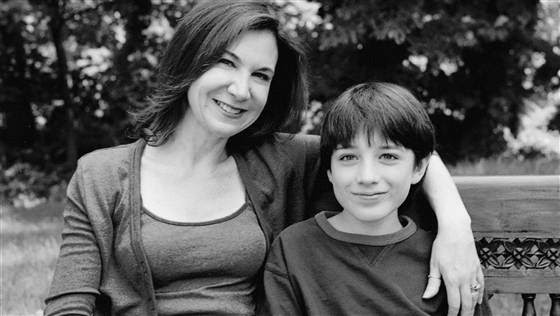
Karen Siff Exkorn in 2005 with her son Jake, who was diagnosed with autism at age 2. After intensive therapy, Jake recovered from autism; he is 17 years old and will be attending college soon.
Do say: “How is your child doing?”
This is what you’d say to the parent of a typical child, right? It’s perfectly acceptable to say this to the parent of a child on the spectrum. They can share with you what’s going on in terms of their child’s treatment and/or educational experience.
2. Don’t say: “You’d never know by looking at her that she has autism! She looks so normal.”
While the speaker might view this as a compliment, most parents of a child on the spectrum would not take it as such. Additionally, in the world of autism, the world “normal” is usually replaced with “typical” or “neuro-typical.”
Do say: “Your daughter is adorable”
Or offer any other compliment that you would use with any typical child.
3. Don’t say: “God doesn’t give you what you can’t handle” or “Everything happens for the best.”
Please don’t use clichés. Unless you’re the parents of a child on the spectrum, you don’t really know just how much there is to handle. Statements like these seem to minimize a parent’s experience by implying that this situation is something that they should be able to handle. Also, while it’s tempting to try to put a positive spin on the diagnosis, most parents of newly diagnosed children don’t feel that the diagnosis is the “best.” Over time, parents come to a place of acceptance, and some even view the diagnosis as a gift or as a way to gain a different perspective on life. But don’t be the one to instruct them about coming to those terms.
Do say: “Is there anything I can do to help you out?” or“I’m here if you need to talk.”
You can offer practical solutions to help a parent handle the diagnosis or the ongoing tasks, like help with grocery shopping, babysitting or other daily responsibilities. Sometimes, parents just need to vent and it’s helpful to have a friend with whom to share their feelings.
4. Don’t say: “I know exactly what you’re going through. My cousin has a friend whose neighbor’s sister has a child with autism.”
It’s human nature to try to show empathy for the family affected by autism, but it’s not right to say that you know “exactly” what parents are going through if you don’t have a child with autism.
Do say: “I don’t know what you’re going through, but I’m willing to listen if you need to talk.”
By honestly acknowledging the gap in your knowledge and offering heartfelt help, you will be a much better support system for the parents of a child on the spectrum.
There are also wonderful resources and organizations that can help educate you about autism.
5. Don’t say: “Do you have other children and are they autistic, too?”
While research shows there is a higher than typical incidence of autism among younger siblings of children with autism, it’s still not appropriate to ask this question. Also, it’s more acceptable to refer to children on the spectrum as “children with autism” rather than “autistic children.” When a child has leukemia, we say the child has cancer, not that the child is cancerous. To many parents, saying a child is autistic defines them only by their autism.
Do say: “Do you have other children?”
Just as you would ask this of parents of a typical child, this is a perfectly acceptable question for a parent of a child on the spectrum.
6. Don’t say: “Why don’t you just try…that new special diet I saw on TV? Or the latest and greatest treatment that was featured in the newspaper?
Please don’t offer unsolicited advice, especially if it’s in the form of a new-fangled or untested treatment for autism. Parents generally go into “research overload” as they try to sort through the myriad of treatments to determine what’s right for their child. Don’t make them defend their choices.
Do say: “I’ve been doing some research on autism and if you’d like, I can share it with you.”
The phrasing of this statement gives parents the option of whether or not they’d be open to hearing about what you’ve discovered.
7. Don’t say: “Don’t you think you’ve put him through enough treatment? Just let him grow out of it.” Or “Just accept him the way he is. Why use treatment to try to change him?”
Children do not spontaneously recover from autism, nor do they “grow out of it.” Parents do accept their children with autism for who they are, but like parents of typical children, they want to give their children every opportunity they can, which often translates into intensive treatment regiments. Research shows the importance of intensive early intervention, and treatment/support usually continues over the lifetime of an individual on the spectrum.
Do say: “What kind of treatment program are you using for your child?” or “What school does your child attend?”
Be careful not to offer unsolicited advice about the treatments or educational choices that have been made, or be overly probing. Take your cues from the parents about how open they want to be about the specifics of their child’s treatment plan.
8. Don’t say: “It’s such a burden to have to drive my kids to soccer practice and ballet classes every day!”or “My kids are talking so much they’re driving me crazy!”
Please don’t complain about all of the “normal” things that bother you as the parent of a typical child -- at least not in front of parents who have children on the spectrum. Most parents of children with autism dream about driving their kids to soccer or ballet, and parents of the 25 percent of non-verbal children on the spectrum dream about their children speaking one day. Be aware of and sensitive to their needs.
Do say: “Can I offer to drive your child to speech therapy or physical therapy?”
Parents appreciate the extra help when it comes to driving their children to appointments, especially if there are siblings at home who need care, or help at an appointment when a child is scared or fussy.
9. Don’t say: “You should really make time for yourself. You need to relax. Maybe schedule a massage?”
Life can be incredibly overwhelming, especially during the months right after your child is diagnosed with autism. Usually, the first thing you want to hear is about everything that you need to know about autism, and the last thing you want to hear is that you should make time for a mani/pedi. Sometimes, as the parent of a child with autism, “me” time is just not realistic.
Do say: “If ever you feel like you’d like to take some time for yourself, I’d be happy to help out.”
Once parents adjust to living with a child on the spectrum and establish a new normal, then it’s okay to offer to take them out for fun, or to stay with their child so that they can go out.
10. Don’t say: “How’s the marriage going? I hear the divorce rate is 80 percent among parents of kids with autism.”
You’d be surprised how many people like to quote this statistic. It’s false! Yes, parenting a child with autism can put additional stress on a marriage, but it seems that the divorce rate is similar among parents with or without autism in the family.
Do say: “Can I offer to babysit so you and your spouse can go out to dinner?”
Parents of newly diagnosed children find it challenging enough to navigate the new world of autism, let alone to find time to have a date night (or trust someone to take care of their child). I went to a benefit for an autism school where the most popular silent auction item was the one for a teacher who offered her babysitting services.
11. Don’t say: “What caused your child’s autism?”
Speaking about the cause of a child’s autism is a particularly sensitive subject because there is no known single cause. There are many theories about the causes of autism, which include heredity, genetics and environmental factors.
Do say: Nothing.
Even if you have a burning desire to ask this question, please don’t. It is both highly controversial and emotionally-charged. Often parents experience guilt around the cause of their child’s autism, and you’d only be adding fuel to the fire.
Here’s a final note to our friends, family and co-workers: Thank you.
We sincerely appreciate your efforts to connect, and hope that you’ll continue to reach out. We really do want your support, and if we don’t always respond the way you wish we would, well…maybe you’ll make up a list for us?
Karen Siff Exkorn is the author of "The Autism Sourcebook: Everything You Need to Know About Diagnosis, Treatment, Coping and Healing—From a Mother Whose Child Recovered" and a board member of New York Collaborates for Autism.
After Me Who Will Care !
Circa 2033, Anand is 49 years old. Unfortunately his mother expired six months back. His father who was 80 years old and was in reasonably good health expired suddenly nine months back. His brother Yogi, settled in Australia, had come down for the last rites of mother. However he had to return back after 14 days due to personal contingencies. Yogi has not been able to get Australian visa for Anand who is intellectually challenged. Yogi had anticipating this situation and was in constant discussion with mother trying to evolve a solution.
Anand suffers from moderate to severe mental disability but was trained well from early childhood on activities of daily living (ADL) by his mother. With age Anand also faces physical challenges, can barely walk and has weakened muscles due to entropy and declining nuro signals. However he is a very cheerful person who loves TV , music, social company and non veg food. He generally goes to a neighboring restaurant for non vegetarian food accompanied by care taker (Milind) at least once a week. He also enjoys participating in religious bhajan-kirtan. Above all he is fond of company of his cousins and their children and other residents of society where he lives.
Anand's parents kept planning to make some arrangement for his after care (when they will be no more). But two reasons played in their mind, deterring them to take a final decision. Firstly, they thought that since home is the best environment they would have Anand stay at home as long as their own health allows them to take care of him. Second reason was about providing Anand the standard of facilities that he was used to at home - they were unable to find such institution. Since both parents expired in a span of three months their plan (what ever parents had in mind) was never implemented. Yogi discussed Anand's resettlement issue with cousins (who had assembled for last rites of his mother) and together they decided to leave Anand in company of care taker Milind. Milind had developed caring attitude towards Anand in the last three years association. He was asked to take care of Anand staying in Anand's home. Milind was authorized to withdraw money from Anand's bank using ATM card for the salary and common living expanses. Yogi and one of Anand's cousin are monitoring bank a/c through net banking and top it up periodically. The decision on shifting Anand to a suitable residential care facility was postponed to future.
This arrangement worked well for four months. One day Milind asked Anand's cousin whether he can bring his wife and daughter from his village to Pune and stay in Anand's house. While this arrangement was still being discussed and finer details debated among Yogi and cousins, Milind received a sad news from his village. His father died in an auto accident. Milind rushed back to his village living Anand in the care of his local cousin. Few days later he called up Anand's cousin to inform that since he has to take care of his ailing mother and widow sister and also the agricultural land it will be difficult for him to return to his job in Pune. He was the only male member left in his family. Anand and his cousin's family are not comfortable to live together on long term basis.
So what happens To Anand now !!
The above is a typical case study that most parents/ families may go thru in the life cycle of Persons with Special Needs.
We call them 'Special Persons'
The above happens in spite of the fact that there are many residential care facilities available for Special persons. The better among them are set up mostly by parents/ siblings of Special Person. They provide facilities for Special Persons to live independently with assistance from care takers, in an atmosphere of care and dignity. These are called Assisted Living Centers (ALC) for Special Persons. To name a few, that are located in and around 200 Km of Pune, there is Nirdhar Pratishthan, Nav Kshitij, Sadhna village, Savali, Adhar etc. Still more are being built by parents associations like Umed Parivar.
Today's Assisted Living Centers (ALCs)
Most private ALCs are managed by trustees consisting of parents/ siblings of Special Persons and run as public charitable trusts/societies. The ALCs generally support vocational training center apart from assisted living arrangement to provide gainful vocation to resident Special Persons. The level of living comfort varies from twin shared room to 10 bed dormitory and would compare with living standard of a family of middle income group to low income group standard, respectively. The degree of household facilities provided to residents vary from institution to institution based on the monthly living expenses charged to guardians. The resident Special persons seem to be happy living there. Most of these ALCs charge monthly fee to guardians of Special Persons and run on no profit basis. They rely on public donations for capital expenditure and at times to cover losses in operating expenditure. They tend not to rely on government grants.
With such Assisted Living Centers (ALC) available, Why is then that parents continue to live thru the uncertainty about the future of their Special Person son/ daughter ?
Parents' Thinking & Concerns
The thoughts that go thru the minds of parents are some what akin to the thoughts the parents under go while selecting a suitable home/ match for their daughter. The prime concern is that Special Person - son/ daughter should get comparable living standard & comforts as he/she is used to at home and should not get ill treated or exploited. There is also a monthly fee payable to ALC which some parents/ guardians think as unnecessary drain on their resources. Hence there is a tendency to postpone the rehabilitation till the mother can look after the Special Person. The issue comes to fore when they themselves (parents) require care during old age, and after their death. The siblings may generally tend to look after their Special Person brother/ sister. But whether similar care is possible after they are employed in a job/ business and married with responsibility of own family is a moot question. In a survey it has emerged that over 42% of old aged parents are not getting the desired care while living with their married son in old age. Therefore logically such percentage of Special Persons could be much higher. Besides the Special Persons may not be able to communicate about their dissatisfaction as effectively as their parents. These issues are not unknown to the parents and are upper most in their mind when ever the thought about future care of their Special Person crosses their mind. Then what are the concerns that deter the parents from taking timely decision ?
CONCERN 1 : Till we are alive, let us take care of him/her as best as we can. It is well known that Special Person are best taken care in an integrated environment. Therefore home would be the best.
Factors:
- Financial affordability of ALC
- Level of care required; perception of Special Person over dependence on them(parents)
- Level of physical comforts ; TV, music, own room, food
- Integration opportunity; with parents, siblings, relatives, family friends, friendly neighbors etc.
- Love & Affection ; attachment, Opposition from siblings
- Risk of sexual exploitation (for women Special Person)
- Not trained in ADL
- Disability not adaptable to most ALCs
CONCERN 2 : Disability/ health/ behavioral condition.
Factors:
- Type of disability; multiple disability, disability requiring specialized care
- Behavioral issues; violent, unsocial, petty criminal
- Extent of disability; Severe, profound, immobile, multiple
- Not trained in ADL
CONCERN 3 : General concerns Factors:
- How the Special Person will be looked after in old age
- Emergency medical facilities
- Redressal of grievances of Special Person
- Safety
CONCERN 4 : Financial constrains (due to lack of planning) Factors:
- Perceived incapacity to pay monthly maintenance charges.
- Uneven distribution of immovable property among siblings resulting in lack of adequate resources for maintenance of Special Person.
- Ambiguous distribution of wealth/ movable property/ business assets.
Overcoming Parents' Concerns
All the above mentioned reasons are justified and based on practical considerations. The underlying reason is attachment (affection) & need for integration, uncertainty of future and some times financial considerations. Some models of Special Person care that would address this requirement are:
- Maximize employment of parents/ siblings in the ALCs. The preference be given to below poverty line Special Person's parent/ sibling/relatives.
- In case land/ FSI is available, build few flats where Special Person stays with parents as a family. ALC looks after Special Person as well as the parents. The parents pitch in the capital cost of flat and all running expanses for self and Special Person. After the death of both parents the flat can be given to another Special Person & parent with condition that first Special Person continues to share the flat. Else other Special Persons are accommodated in the flat leaving at least one room for original Special Person occupant.
- Some of the large parent trusts build technical and administrative capacity to provide care to smaller group of parents of Special Person who may form a mini ALC (mALC) in one of their houses. The responsibility of managing the mini ALC is outsourced to management team of larger ALCs. Therefore larger ALC conduct on job training for care takers who are later employed in mini ALCs. Such large ALC trusts can provide care taker, technical and administrative support from their pool of staff. In an unforeseen eventuality where a mini ALC is required to be closed, the affected Special Persons have to be accommodated in trust's larger ALC. The author can suggest broad outlines of terms of agreement and fiduciary arrangement. The parental concerns also point to two contradictory issues. First there are some parents/ guardians who are unable to afford monthly fee . Second there is a segment of high income parents (HNIs) who are ready to pay for the facilities but existing ALCs do not cater for such facilities such as single room (studio type) occupancy, TV etc.
- Here some exclusive lodging facilities may be provided at 3 to 5 times the capital & operative cost. The additional fee can cross subsidize common facilities and poorer Special Persons. On the face it may look controversial but such cross subsidy/ exclusivity are practiced in all spheres of our life. Resultant beneficiaries will be to both wealthy and poor category of Special Persons. If such facility existed Anand's parents would have made a timely decision !!
- The suggestions at Serial (b) above also would also address the income disparity issue.
Addressing General Concerns
The general concerns arising in the mind of caring parents of Special Person is understandable. However most of these concerns are taken care by ALUs managed by professionally managed trusts run by conscientious parents. Generally ALUs have tie up with local doctor and nursing home for emergency care. They also tie up with philanthropic specialists and hospitals for regular check up. But to ensure that the local manager and care takers are well aware of policies and procedures it is desirable to have documented procedures. These procedure in the form of booklet should be available to parents for their reference and satisfaction, and would define minimum service levels. The trustees have to ensure that the staff is formally trained on these procedures. The special residents are also apprised of these procedures to the extent possible. Some of the procedures that must be documented for staff training are :
- Behavior management policy
- Residents' IN/OUT and guardian visit register
- Medical check up and history of each resident
- Base line assessment and periodic update
- House keeping services & area hygiene
- Nutrition diet & food tasting
- Emergency evacuation procedure
- Emergency treatment procedure
- Record of Trustees meeting with Special Persons to address grievances ( one to one, and group meeting)
- Succession pipeline of Trustees who are parent of special person
Senior Citizen Parents Counseling Services
Last set of issues mainly arise from the ignorance, lack of awareness and some times irrational actions on the part of parents of Special Person. For example there are many cases of old mother being ill treated by own son/daughter after the father unwisely bequeathed all property to sons/ daughters during her (mother's) life time. The author has come across financially well off guardians unwilling to pay meager fee increase for the Special Person residing in Nirdhar Pratishthan ALC. The Special Person is deprived of the rightful share of parent's wealth that could easily pay for her monthly ALC expenditure.
We are well aware of early intervention counseling for young parents. In the context of fiduciary issues there is requirement of 'Later' age counseling of parents of Special Persons. The scope of counseling services should cover following subjects:
- Guardianship
- Fiduciary responsibility
- Justified distribution or cash in lieu of share of unmovable property & mother's stree-dhan
- Family pension provisions for retired government employees
- Importance of readying the statutory documents/ certificates for Special Person during parents' life time
- State government pension applicable for below poverty line Special Persons etc.
- Medical policy initiated by National Trust
The present generation of parents have less luxury of relying on joint family ties to take care of Special persons after their death. The concern of parents, rich or poor, about the upkeep (after them) of their Special Person son/ daughter has to be addressed by today's parent associations. Therefore building capacity of parent bodies to undertake management of mini ALCs and large ALCs is essential. The documentation of standard procedures followed in good ALCs and training will improve standard of care in other ALCs. The parent bodies also need to generate and share knowledge with individual parents to enable them to handle fiduciary matters and make informed choice while bequeathing their wealth.
After Me Who Will Care!
Answer: Well managed parent bodies bequeathed with fair share of my assets.Cdr. (Retd.) Shrirang Bijur, Mrs. Anjali Bijur Email: bijursn@gmail.com
Commander Shrirang Bijur
Commander Shrirang Bijur had an illustrious professional career spanning over 38 years during which he worked as a naval officer on board 4 warships, Head of management consultancy (infrastructure) in TCS and as Senior Vice President for infrastructure development in Bharti Airtel. After retirement, In his second inning, he is mentoring various NGOs involved in supporting causes for Intellectually Challenged persons and street girl children. He is also focused on overcoming bottlenecks that prevent government subsidies and benefits reaching the most vulnerable among the challenged persons and orphan girl children. He lives in Pune.
Mrs Anjali Bijur
Mrs Anjali Bijur is a mother, special educator, early intervention counselor and an innovator thinker. She has been developing home bound programs for intellectually disabled persons who are unable to join any vocational training centers. In her leisure time she supports children of domestic helps with their studies.
Training Methods
A special child can not learn all the things what other children can do. But with the help of family members, teachers he can participate in most of the activities. Training is very essential for making the child become part of any regular social activity or learning Activities of Daily Life (ADL) and be integrated in the society. Guidelines for Parents and Caregivers
- A child with disability may not be well accepted in the outside world. The main reason being lack of awareness. Make other people understand the disability, let them empathize with the child and help you in the training process.
- Do not shield the special child from the outside world instead expose him to various experiences, give him the opportunity to do the things what other children of his age do.
- Be patient, give some extra time every day to learn his ways of communication
- Motivate him to do the Activities of Daily Life (ADL). Explain the importance of learning ADL which will lead to his independence and being self-sufficient.
- Observe the child's Peak and Weak hours. Do not start difficult activities in his weak hours.
- After every activity big or small praise him discretely (Praise should not lose its value)
- Hug him, make him feel wanted despite failing
- Set aside a particular time for training.
- Make innovations, modifications in the teaching methods.
Remember It is you, who can make him independent.
Give him a fish
and feed him for a day
Teach him fishing
and feed him for a Lifetime!!
The Ten Commandments for Parents of Special Children
1 .Take one day at a time, and take that day positively. You don't have control over the future, but you do have control over today.
2. Never underestimate your child's potential. Allow him, encourage him, expect him to develop to the best of his abilities.
3. Find and allow positive mentors: parents and professionals who can share with you their experience, advice, and support.
4. Provide and be involved with the most appropriate educational and learning environments for your child from infancy on.
5. Keep in mind the feelings and needs of your spouse and your other children. Remind them that this child does not get more of your love just because he gets more of your time.
6. Answer only to your conscience: then you'll be able to answer to your child. You need not justify your actions to your friends or the public.
7. Be honest with your feelings. You can't be a super-parent 24 hours a day. Allow yourself jealousy, anger, pity, frustration, and depression in small amounts whenever necessary.
8. Be kind to yourself. Don't focus continually on what needs to be done. Remember to look at what you have accomplished.
9. Stop and smell the roses. Take advantage of the fact that you have gained a special appreciation for the little miracles in life that others take for granted.
10. Keep and use a sense of humor. Cracking up with laughter can keep you from cracking up from stress.